
Studying at Géodata Paris
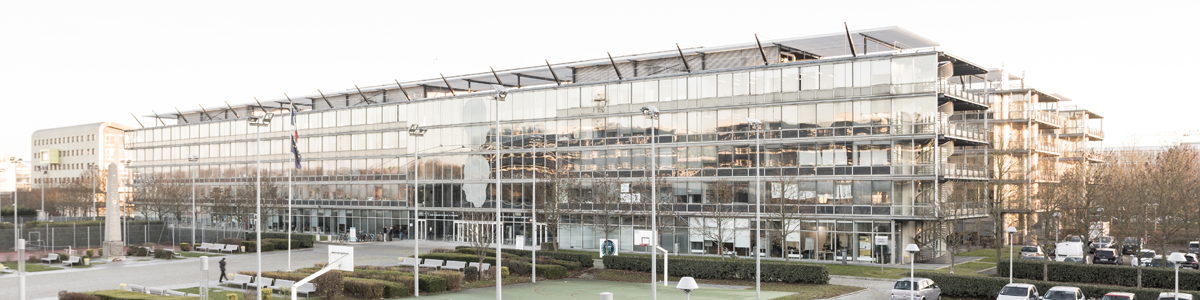
Ideally located, Géodata Paris offers both a quiet environment in Marne-la-Vallée and quick access to Paris by public transport (25 minutes) to enjoy the social and cultural life of the capital. Thanks to the human scale of its classes, Géodata Paris ensures a strong integration of international students. Thanks to its network of associations, the school and the Cité Descartes campus offer students a wide range of activities (sports, arts, cinema, debates, games, etc.).
There are several ways to enrol at Géodata Paris
Through an exchange partnership
Step 1 : Your home institution nominates you.If your higher education institution has a student exchange agreement with Géodata Paris, you can then apply for international mobility at the school. Nomination deadlines are as follows :
- 1st semester (September to end of January) and full year: May 1
- 2nd semester (end of January to end of May): September 30
NB: M2 mobility is offered for the full year only (no semester mobility).
Step 2: Application. Once you have been nominated by your higher education institution, you will be asked to fill out an application form and choose the program you wish to apply for. Below is the list of programmes open to incoming Erasmus students :
- 2nd year of the engineering course
- PPMD Specialized Master
- Master 2 TSI
- Master 2 IGAST
Application deadlines: You will have two weeks to fill out and send the application form.
Stage 3: Your application is reviewed.The school’s pedagogical team studies your application and can arrange a video interview if necessary. Step 4: You get a response from Géodata Paris.The school will respond to your application within 5 weeks, at which point you will receive a letter of acceptance and advice on preparing for your arrival in France.
Via a dual degree
Students wishing to pursue a dual degree should contact their current institution, which will forward their application to Géodata Paris for review.
Se présenter au concours EG@
Le concours EG@ est réservé aux étudiants africains. Il s’agit d’un concours commun à 11 écoles d’ingénieurs françaises et il permet de prétendre à rejoindre l’une d’entre elles.
- 1er décembre 2025 : ouverture des inscriptions
- 16 avril 2026 : limite de dépôt des dossiers de candidature
- 25 avril 2026 : épreuves écrites
- 2 au 31 mai 2026 : épreuves orales
- 5 juin 2026 : résultats complets
Applying directly to a course
Depending on your nationality and country of residence, there are several application procedures - they fall into two broad categories :
If you do not need to apply for a visa to study in France :
This applies to European students and non-European students already living in Europe. You must therefore follow the application procedure specific to each course.
If you need a visa to study at Géodata Paris : Géodata Paris is a member of the Campus France forum and therefore follows the ‘Studying in France' procedure.
The ‘Studying in France’ procedure is intended for foreign students residing in one of the following 65 countries:
| AFRICA | South Africa, Benin, Burkina Faso, Burundi, Cameroon, Comoros, Congo, Ivory Coast, Djibouti, Ethiopia, Gabon, Ghana, Guinea, Kenya, Madagascar, Mali, Mauritius, Mauritania, Nigeria, Central African Republic, Democratic Republic of the Congo, Rwanda, Senegal, Chad, Togo. |
| ASIA | Armenia, Burma, Cambodia, China, South Korea, Hong Kong, India, Indonesia, Japan, Malaysia, Nepal, Pakistan, Singapore, Taiwan, Thailand, Vietnam. |
| AMERICA | Argentina, Bolivia, Brazil, Canada, Chile, Colombia, Ecuador, United States, Haiti, Mexico, Peru, Dominican Republic |
| NORTH AFRICA/ MIDDLE EAST | Algeria, Saudi Arabia, Bahrain, United Arab Emirates, Egypt, Iran, Israel, Jordan, Kuwait, Lebanon, Morocco, Qatar, Tunisia. |
| EUROPE | Azerbaijan, Georgia, Russia, Turkey, Ukraine, United Kingdom. |
If you live in one of these countries, this application procedure is compulsory if you wish to study at Géodata Paris. All the procedures are carried out online, from applying to obtaining a visa, making it easier for you. You will find full details of this procedure in the article ‘If you live in a country covered by the “Studying in France" procedure'.
If you are not an EU citizen, do not currently reside in the EU and are not a citizen of a country covered by the ‘’Studying in France” procedure, you have until 1 March to apply via the standard procedure.
A student’s account

Je suis Arianna, je viens d’Italie, j’ai déjà un diplôme d’ingénieur en informatique et j’ai commencé mon master en Italie en Géo-informatique et là je suis ici à Géodata Paris pour étudier la géomatique dans le parcours PPMD (Photogrammétrie, Positionnement et Mesure de Déformations).
Comment tu as intégré Géodata Paris ?
Je suis arrivée en échange avec le programme ERASMUS. En Italie, on a fait un concours, j’y ai participé et j’ai eu ma place pour venir ici à Géodata Paris.
Comment s’est passée ton intégration dans la promo ?
Je suis arrivée en septembre, il y avait encore la classe qui était en entier, on n’était pas encore divisé en filière, donc on était 60, et j’essayais de parler avec tout le monde et de bien m’intégrer dans la classe. Et après 3 semaines, on s’est divisé en filière, donc on était juste 12 ou 15 dans la classe, c’était bien d’avoir un groupe plus petit pour essayer d’avoir un peu plus de contact avec les camarades et de me trouver des ami.e.s.
Tu as appris quoi en cours pendant ce semestre ?
On a appris plein de choses que je n’avais pas vues en Italie, surtout sur le côté pratique. Là-bas, on n’a pas beaucoup la possibilité de faire de la pratique ou des stages terrain, donc on n’utilise presque pas le matériel qu’on devra utiliser plus tard dans notre travail, et on fait aussi moins de pratique sur ordinateur. Ici, j’ai vraiment apprécié tout le côté pratique : travailler dehors pour collecter des données, mais aussi aller en salle informatique pour les utiliser ensuite. On a fait plusieurs projets, comme des relevés terrestres, de la photogrammétrie, de l’informatique ou encore du Deep Learning, ce qui nous a permis de découvrir beaucoup de sujets différents et de mieux comprendre comment on passe de la théorie à la pratique.
Tu peux nous parler d’un projet marquant ?
Je pense que le projet le plus important était le projet qu’on a fait pendant le 1er mois, […] le stage terrain. Et donc on a passé deux semaines à faire une modélisation 3D de l’université, juste ici, et au début on a fait des cours pour comprendre comment allait se passer la partie pratique, et après on a aussi beaucoup travaillé en autonomie pour les semaines d’après pour essayer d’avoir un morceau en modèle 3D de l’université. J’ai beaucoup aimé toute la partie pratique et aussi la possibilité d’être en autonomie et d’apprendre vraiment à utiliser un Tachéomètre ou tout ce qui est matériel.
Quelle spécialisation tu as choisi et pourquoi ?
J’ai choisi la spécialisation PPMD, Photogrammétrie, Positionnement et Mesure de Déformations, parce que je n’avais pas eu la possibilité d’étudier la photogrammétrie en Italie, et aussi j’avais envie de mettre en pratique, avec un stage terrain, tout ce que j’avais déjà appris en Italie.
Où est-ce que tu te vois travailler et sur quel sujet ?
Après la fin de mes études, j’aimerais faire un doctorat et donc faire de la recherche, et peut-être rester à l’université même après.
Tu envisages quoi pour la suite, à ton retour en Italie ?
Quand je rentre en Italie, je vais faire un stage de recherche, ce n’est pas forcément la même chose qu’en France, mais je vais quand même passer de 6 mois à 1 an avec un prof qui va me guider dans une recherche avant de faire une présentation de ma recherche pour avoir mon diplôme.
Étudiante italienne

Marie is from Kristiansand in Norway. As part of the Erasmus + exchange programme, she came to spend a semester at ENSG, in the second year of the engineering course. We spoke to her just a few days before she left.
What courses did you take and what were your favourites ?
“I had courses in webmapping, programming, finance, economics and project management, so I took the same courses as the others, except for English, which I decided not to take. I really liked the web applications course, and I made a lot of progress in this subject because I'd had a course in Norway where I had to create a web application without any introduction or information from the teacher (we had to Google everything), whereas here I was able to understand everything, both in terms of content and interactions.”
Why did you want to study at ENSG ?
“I chose to study at ENSG because it's the only school of geomatics in France. In Norway, I study engineering specialised in geomatics.”
Did you feel you fitted in your class?
“As French is not my mother tongue, I didn't understand everything that was said in the classroom, but nevertheless I did fit in.”
Have you made any progress in French?
“I've been studying French since high school, and I took French lessons for a month before I started at ENSG. I also took some during my stay, so my French has improved a lot.”
»
Are there any differences between the Norwegian and the French higher education systems?
“I really enjoyed the atmosphere at ENSG, especially in the classroom. I was in a small group, so the teachers could help me more and they also remembered me. In fact, that's not the case at all in Norway, so it made a big difference to me.”
If you had to recommend ENSG, what would you say?
“If I had to promote ENSG, I'd say it's the ideal school to study geomatics because the people are connected, and I felt really comfortable.”
What are your plans for the future?“I don't know what area of geomatics I'm going to specialise in yet - maybe programming because I'm really keen on that subject.”
Student from Norway
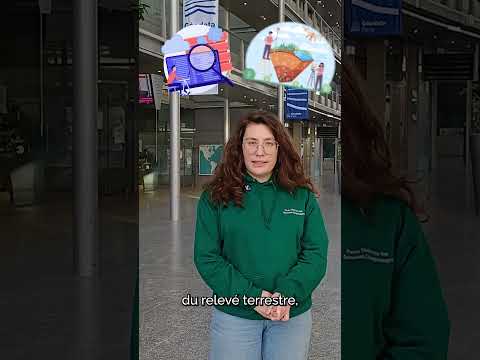
Interview d'Arianna, étudiante internationale
By clicking on play, you accept cookies from YouTube


